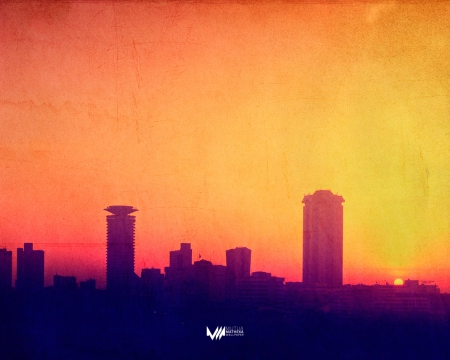
Beauty of our City
Everyday as the sun rises, whenyou wake up in the morning have you ever minded to have a peep out side your window and check the beauty portrayed in the outwards, well this time round NAIROBI29 has it for you. log in daily and have a look of what you know and what you don’t know about your city from beautiful skyscrapers, roads, markets, nightlife and kenya’s pride… wildlife. Know your city and its environs as you see it.
Nairobi-Districts and neighborhoods
Nairobi is divided into a series of constituencies, these are Makadara, Kamukunji, Starehe, Langata, Dagoretti, Westlands, Kasarani, and Embakasi.
The main administrative divisions of Nairobi are Central, Dagoretti, Embakasi, Kasarani, Kibera, Makadara, Pumwani, and Westlands.
Most of the upmarket suburbs are situated to the west and north-central of Nairobi, where most European settlers resided during the colonial times. These include Karen, Langata, Lavington, Gigiri, Muthaiga, Spring Valley, Loresho, Kilimani, Kileleshwa, Hurlingham, Runda, Kitisuru, Nyari, Kyuna, Lower Kabete, Westlands, and Highridge, although Kangemi, Kawangware, and Dagoretti are lower income areas close to these affluent suburbs.
The city’s colonial past is commemorated by many English place-names. Most lower-middle and upper middle income neighborhoods are located in the north-central areas such as Highridge, Parklands, Ngara, Pangani, and areas to the southwest and southeast of the metropolitan area near the Jomo Kenyatta International Airport.
The most notable ones include Avenue Park, Fedha, Pipeline, Donholm, Greenfields, Nyayo, Taasia, Baraka, Nairobi West, Madaraka, Siwaka, South B, South C, Mugoya, Riverbank, Hazina, Buru Buru, Uhuru, Harambee Civil Servants’, Akiba, Kimathi, Pioneer, and Koma Rock to the center-east and Kasarani to northeast area among others.
The low and lower income estates are located mainly in far eastern Nairobi. These include, Umoja, Kariokor, Dandora, Kariobangi, Embakasi, and Huruma. Kitengela suburb, though located further southeast, Ongata Rongai and Kiserian further southwest, and Ngong/Embulbul suburbs to the far west are considered part of the Greater Nairobi Metropolitan area. More than 90% of Nairobi residents work within the Nairobi Metropolitan area, in the formal and informal sectors (jua kali). Many Somali immigrants have also settled in Eastleigh, nicknamed “Little Mogadishu”.
Nairobi-Climate
At 1,795 metres (5,889 ft) above sea level, Nairobi enjoys a moderate climate. Under the Köppen climate classification, Nairobi has a subtropical highland climate.
The altitude makes for some cool evenings, especially in the June/July season, when the temperature can drop to10 °C (50 °F). The sunniest and warmest part of the year is from December to March, when temperatures average the mid-twenties during the day.
The mean maximum temperature for this period is 24 °C (75 °F).There are two rainy seasons, but rainfall can be moderate. The cloudiest part of the year is just after the first rainy season, when, until September, conditions are usually overcast with drizzle.
As Nairobi is situated close to the equator, the differences between the seasons are minimal. The seasons are referred to as the wet season and dry season. The timing of sunrise and sunset varies little throughout the year, due to Nairobi’s close proximity to the equator.
Nairobi-Geographical
The city is located at 1°17′S 36°49′E and occupies 696 square kilometres (270 sq mi). Nairobi is situated between the cities of Kisumu and Mombasa.
Nairobi is adjacent to the eastern edge of the Rift Valley, minor earthquakes and tremors occasionally occur. The Ngong Hills, located to the west of the city, are the most prominent geographical feature of the Nairobi area.
Mount Kenya is situated north of Nairobi, and Mount Kilimanjaro is towards the south-east. Both mountains are visible from Nairobi on a clear day.
The Nairobi River and its tributaries traverse through the Nairobi County.Nairobi’s western suburbs stretch all the way from the Kenyatta National Hospital in the south to the UN headquarters at Gigiri suburb in the north, a distance of about 20 kilometres (12 mi). The city is centered on the City Square, which is located in the Central Business District. The Kenyan Parliament buildings, the Holy Family Cathedral, Nairobi City Hall, Nairobi Law Courts, and the Kenyatta Conference Centre all surround the square.
A Melting Pot of Cultures
Acting like a large magnet, Nairobi has attracted a wide spectrum of mankind. The population of the city now totals over three million. The completion of the railway gave a good reason for people to settle in the region. Indians who helped construct the line remained to establish businesses that grew and spread around the country. Other entrepreneurs followed from Australia, Canada, and several African lands.
Nairobi is a melting pot of cultures. In the streets one may encounter an Indian lady with a flowing sari heading for the shopping mall, a Pakistani engineer rushing to a construction site, an immaculately dressed flight attendant from the Netherlands checking in at one of the hotels, or a Japanese businessman hurrying to a crucial business meeting, likely at Nairobi’s thriving stock market. Added to this, local residents can be found waiting at bus stops; doing business at stalls, open-air markets, and shops; and working in offices or the many industries found in Nairobi.
Paradoxically, few of the Kenyans living in the city can be termed true “Nairobians.” Most have come from other parts of the country, searching for “greener pastures.” In all, the residents of Nairobi are friendly and welcoming. Perhaps it is such hospitality that has made the city a host to world and regional bodies. The world headquarters of the United Nations Environment Programme is in Nairobi.
What Attracts Visitors?
Kenya is a country with a vast and varied array of wildlife. Its many national parks and game reserves continue to attract thousands of visitors annually. Nairobi is the base from which many tour excursions are organized. Yet, Nairobi is also a tourist destination in itself. Very few cities in the world have animals roaming at their doorstep. Nairobi National Park, located less than ten kilometers from the city center, is a visitor’s haven. Here one encounters Nairobi’s former residents firsthand. Only a few strands of wire separate animals from the human population. And as recently as September 2002, a full-grown male leopard was caught in the living room of a Nairobi home, having strayed from a nearby forest!
A few minutes’ walk from the city center is the Nairobi Museum. Hundreds of visitors come here daily to learn about Kenya’s rich history. A snake park within the museum plays host to many species of reptiles. The crocodile hardly seems disturbed by a visitor’s stare. A nearby tortoise too, its speed notwithstanding, appears unmoved by the busy world around it. Of course, the main residents here are the slithering type—cobras, pythons, and vipers. With such creatures around, be sure to take note of the sign: “Trespassers Will Be Poisoned”!
Growth of a City
Located at an elevation of approximately 5,500 feet [1,680 m], Nairobi enjoys an impressive view of the land around it. On clear days one can easily spot two significant African landmarks. To the north lies Mount Kenya, at 17,058 feet [5,199 meters] the nation’s highest mountain and the second highest in Africa. Farther south on the Kenya-Tanzania border is Mount Kilimanjaro, at 19,340 feet [5,895 meters] Africa’s highest. The perpetual presence of snow and ice on Kilimanjaro, which lies near the equator, intrigued European geographers and explorers 150 years ago.
With a city history spanning over 50 years, Nairobi has undergone a complete metamorphosis. Its growth is evident in its ever-changing skyline. Today’s tall and imposing buildings of glass and steel sparkling in the light of the setting tropical sun are a sight to behold. A visitor to Nairobi’s central business district may wonder in disbelief upon learning that the very ground on which he is walking was a lurking place of wild beasts—a dangerous area for humans—just a hundred years ago.
In time, that changed. Exotic flora that included beautiful bougainvillea, blossoming jacaranda, fast-growing eucalyptus, and wattle was introduced. Thus, formerly dusty trails were slowly turned into tree-lined avenues, which continue to provide pedestrians with shade during hot seasons. An arboretum near the city center contains at least 270 species of trees. We can imagine why another writer stated that Nairobi “looks as if it might have been built in the middle of natural forest.” The luxuriant vegetation has greatly helped regulate Nairobi’s inviting temperatures—warm days and cool nights.
Nairobi…The History
“A bleak, swampy stretch of soggy landscape, wind-swept, devoid of human habitation of any sort, the resort of thousands of wild animals of every species. The only evidence of the occasional presence of human kind was the old caravan track skirting the bog-like plain.”—THE GENESIS OF KENYA COLONY.
THESE words describe the Nairobi of a little more than a century ago, where lions, rhino, leopards, giraffes, deadly snakes, and myriads of other forms of wildlife made their home. The brave Masai brought their beloved cattle to the fresh waters of a stream located there, a welcome sight for the nomadic communities. In fact, the Masai called the river Uaso Nairobi, meaning “Cold Water,” and the location Enkarre Nairobi, meaning “Place of Cool Waters”—thus providing the name for the area that would completely alter Kenya’s history.
An important event in the development of Nairobi was the construction of the Kenyan railway, once known as the Lunatic Express. By mid-1899, the 327 miles [530 km] of track stretching from the coastal city of Mombasa to Nairobi had been laid. By this time, the construction workers were smarting from their encounter with the famous “man eaters of Tsavo,” two lions that had killed many of the men’s colleagues, and the crew was facing the formidable terrain of the Great Rift Valley. Because the rail line was to penetrate farther into the interior, Mombasa, which had been the main depot, was no longer viewed as a viable location. Instead, in spite of its inhospitable appearance, Nairobi was deemed the best location for a resting-place for workers and an inland depot for construction materials. This helped make way for it later to become Kenya’s capital.
Early in the 20th century, Nairobi was chosen as the administrative center for the newly created East Africa Protectorate, as Kenya was then known. Advance planning would have helped the budding city. Instead, a jumble of rough structures sprang up around the railway station. Made of wood, corrugated iron sheets, and other local materials, the structures made Nairobi appear more like a shantytown than a future international center. The few buildings in Nairobi at the turn of the 20th century were hardly designed with an eye to such a possibility. Also there remained the ever-present threat from the wild animals that roamed the vicinity.
Diseases soon took their toll on the new settlement. An outbreak of plague was the first real test for the new administrators. A quick remedy? The affected areas of the town were burned down to curb the spread! In the next half century, Nairobi would slowly shed its unsightly past and rise to become the commercial and social hub of East Africa.
Nairobi29
Nairobi29 is a brainchild-media house currently in its ‘young years’. It is exclusively created by a group of like-minded student from the East African School of Media Studies based in Nairobi Kenya. The out-of-class project module will see Nairobi29 grow intensively and fast-tracked.
The project seeks to provide visitors to, residents of and any interested parties with more information about the Capital City of Kenya. The project picks us on a zero-online information database lacking in the greater Nairobi. Apart from government and private tour firms in the region, Nairobi score poorly on a dedicated information platform. The Daily newspapers highlight the plight of Kenyans living in the capital rather than offering solid information.The government on the day has tried to avail some of these information yet it is hiccuped by long formalities.
Nairobi City